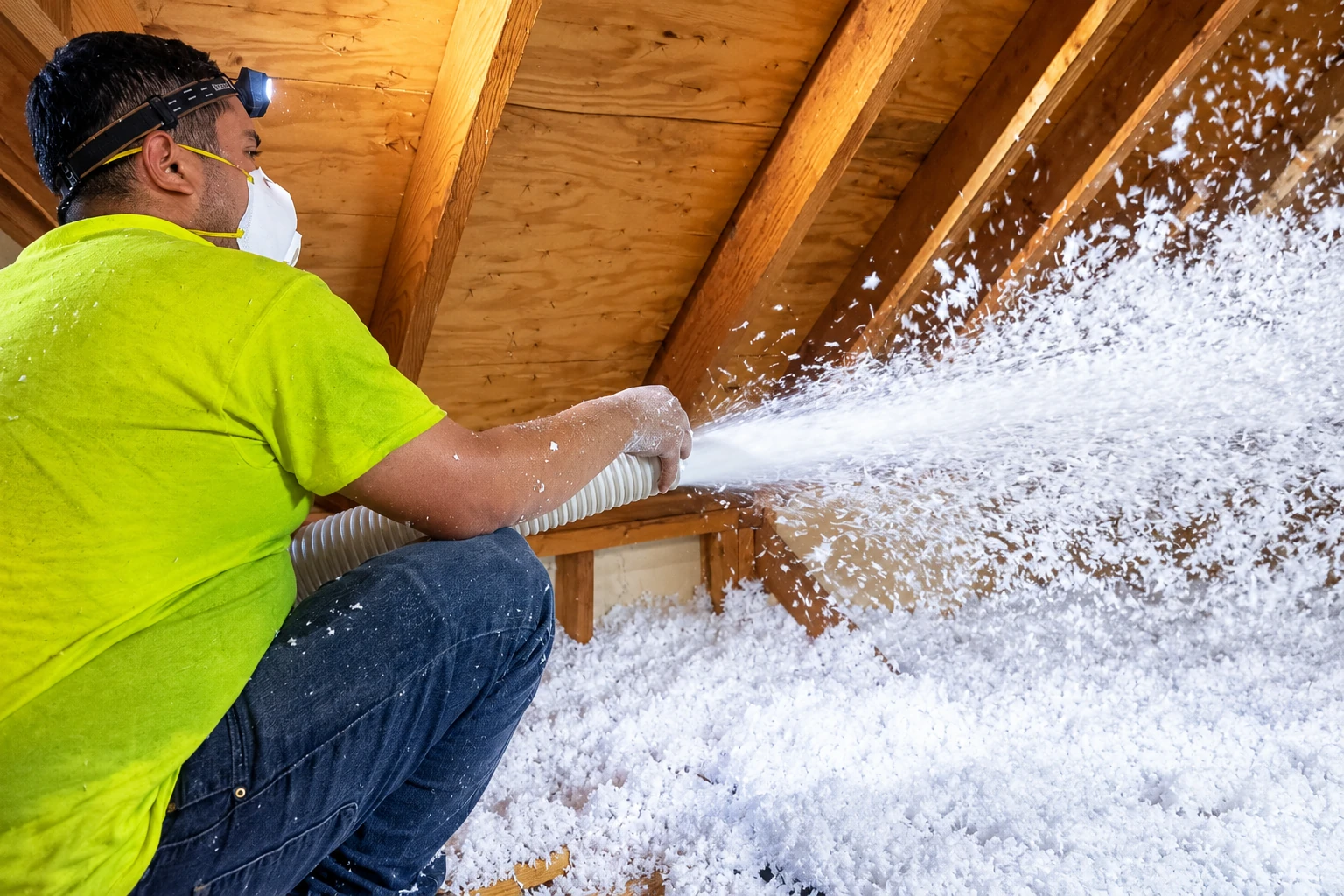
Blown-in insulation in Hobbs NM - an even blanket over a sealed ceiling
Hot upstairs rooms and a power bill that keeps climbing? We seal the attic gaps first, then blow in an even layer.
Is blown-in insulation right for your Hobbs attic?
Blown-in insulation is loose fiberglass, rock wool or cellulose that we blow through a hose over the ceiling of an existing vented attic, and for most houses in Hobbs, NM it's the simplest way to help the house hold its heat in winter and keep it out in summer.
Most of the calls I get about this start with a room that never feels right, usually the bedrooms upstairs or the room over the garage, and the attic above it is usually the reason. The price moves with the size of the attic, how many inches are already up there, how many gaps around lights, pipes and the hatch need sealing, and whether old material has to come out first. The schedule mostly turns on whether that old layer needs testing or removal and whether the job needs a permit, and the written estimate I give you after looking at the attic spells out your own figures. If you'd like to look past the attic, our home insulation work covers the rest of the house.
How can you tell your attic needs more insulation?
Most people don't go up in the attic until something feels off downstairs. These are the things homeowners around Hobbs tell me they noticed before they called, and what each one usually points to.
Upstairs rooms stay hot into the evening, which usually means heat is pouring through a thin attic layer.
The room over the garage runs hotter or colder than the house, usually because the ceiling above has thin insulation.
Ceiling joists poke up through the attic insulation, a sign it has settled or was never deep enough.
You feel drafts at ceiling lights, the attic hatch or around pipes, which points to gaps that need sealing.
Old insulation is matted, stained or full of droppings, which means it should come out before anything new goes in.
Your heating and cooling run nearly nonstop and the power bill keeps climbing, often from heat moving through the ceiling.
If you notice droppings, wet insulation or a steady draft at the hatch, please call us before adding another layer, because new fill over the problem only hides it.
What happens when you call us about blown-in insulation?
I'd like you to know what's happening in your own home at every stage, so here's how a blown-in attic job runs with us, from your first call to the walk-through.
Call or send us a request
You call (575) 318-2651 or fill out our form, and we get back to you to set a time for me to come out. If a date has to move later on, I'll call ahead rather than leave you waiting.
I look the attic over
I check how many inches are already up there, what the old material is, where air leaks up through the ceiling and whether the eave vents are clear, and I note anything that should be fixed first. You get a written estimate that lists the air sealing, which closes those gaps before insulating, plus the material and the depth we plan, so you know what you're paying for before you decide.
We sort out the permit
When you're ready, I check with the office that covers your address whether the job needs a permit, and if it does, we apply for it and arrange the inspections. Then we set the work date and keep to the order we agreed.
Seal, blow in and walk through
Our installers seal the ceiling gaps first and then blow in an even layer across the whole attic with the eave vents kept clear, while I check the work along the way. When it's done, I walk through the finished attic with you and answer any questions you have.
Get a written estimate for your attic
Send the form and we'll reply within one business day to set a time for me to come out and give you a free on-site estimate, with no obligation. Please mention the attic's rough square footage if you know it.
- Call
- (575) 318-2651
- Hours
- Mon–Sun: 6 AM–11 PM
Blown-in fill, air sealing and spray foam choices
Loose fill slows heat, but it doesn't stop air, so before we blow in anything our crew seals the gaps around can lights, pipes and the attic hatch. That sealing is part of my estimate, and it's fair to ask any installer whether it's in theirs. If the old layer is soaked or full of droppings, it comes out first through insulation removal so the problem doesn't stay under the new fill.
We work for an even depth across the whole attic and carry it out to the top plate, where the ceiling meets the top of the wall framing, because the edges are where coverage usually ends up thin. The eave vents stay clear so the attic keeps breathing, and baffles, which are guards set at the eaves, keep air moving and stop the fill from falling in. A buried vent can trap moisture in the framing.
Spray foam is the other way to go, and it costs more because it seals air and insulates in one step. For most attics, sealing the gaps and topping up with loose fill is the better value. If your ductwork runs through the attic, foam usually earns its price, and I'll tell you which way I'd go once I've seen the space.
Blown-in insulation questions from Hobbs homeowners
How much does blown-in attic insulation cost in Hobbs?
Across the US, blowing insulation into an attic usually costs about $4 to $7.50 per square foot installed, and that's the going national price, not our quote for your house. Where your attic lands turns on the things I mentioned at the top of this page, and the written estimate I give you after looking at it puts a number on your job.
Is blown-in insulation better than batts for an attic?
For most existing attics, yes, because blowing loose fill usually costs less than laying batts, the precut blankets, and it gives better coverage. Batts tend to leave gaps around joists, wires and odd corners, while loose fill fills in around them, though installation costs still vary from house to house.
What should I do if my attic has old vermiculite insulation?
Leave it alone and have it tested by an approved lab before anyone disturbs it, because vermiculite, a light, pea-size, flaky gray mineral, may contain asbestos. The City of Hobbs also tells owners who suspect asbestos to call the Air Pollution Control Bureau at 1-800-224-7009 before any work starts. I look for it on every estimate, and we don't blow anything in until that's settled.
How do I know how much insulation to add to my attic?
Find out how many inches you already have and compare the planned total with current building code, since blown attic insulation should meet or exceed what the code requires. I measure the existing layer on the estimate and write down how much we plan to add, and you can ask each installer how their planned amount compares with current code.
Who issues building permits for insulation work in Hobbs?
Hobbs Building Inspections issues residential permits, and unless the code exempts the work, altering, repairing or improving a house needs a permit before it starts. I check with the city before we begin, and if your attic job needs one, we apply for it and arrange the inspections. For an existing home with no structural changes, the city accepts two sets of lists outlining the work and materials, and for jobs in North Hobbs, Lovington, Seminole, TX or nearby, I check with the office that covers the address, such as Lea County or the City of Seminole.
How do I check that an insulation contractor is licensed in New Mexico?
Look each bidder up on the view-only list of licensed contractors that the City of Hobbs building services page points owners to, which shows each contractor's license classification, and do it before you sign. The state requires a license for anyone who does or offers construction contracting, and its GS-1 insulation class covers installing insulating material in buildings for energy savings and temperature control. We're licensed and insured, and you're welcome to look us up before I come out.
Related insulation work for Hobbs homes
Home insulation
If the attic is only part of why the house feels uneven, looking at the whole house shows where else heat slips through.
Insulation removal
When the old attic layer is wet, matted or full of droppings, taking it out first gives the new fill a clean, dry ceiling to sit on.
Book an attic check for blown-in insulation
Call B&M Hobbs Spray Foam Insulation at (575) 318-2651 or send our request form, and if you've seen gray, flaky insulation up there, please mention it so we can plan for a lab test before any work is scheduled.
Mon–Sun: 6 AM–11 PM