
Closed-cell foam insulation in Hobbs, NM - a tight, dry layer that seals and insulates
Cold floors, a sweating shop wall or ductwork in a hot attic? Closed-cell foam seals out drafts and stands up to moisture in one layer.
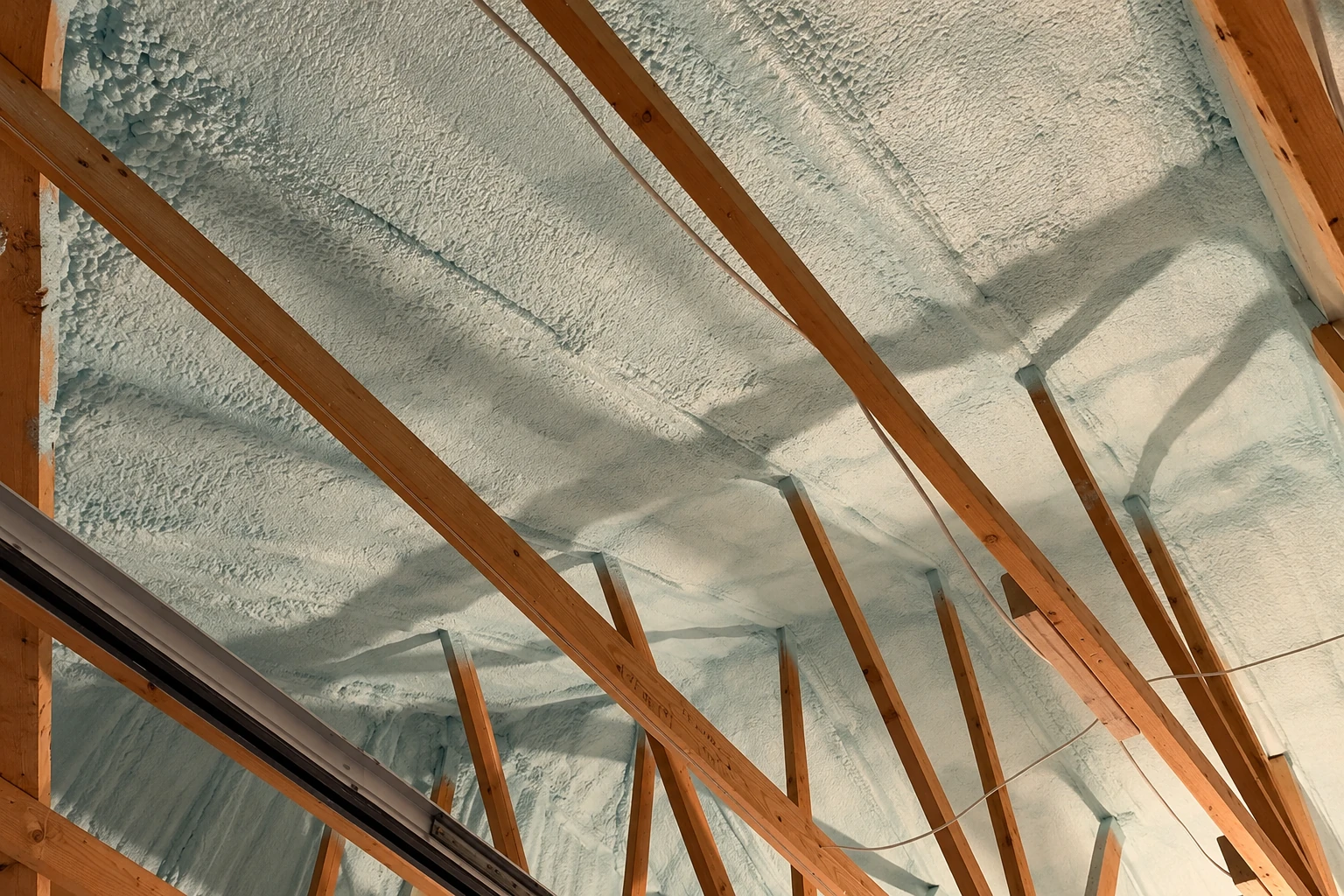
Is closed-cell foam worth the extra cost in Hobbs?
Closed-cell foam insulation is spray foam that sets into a dense, rigid layer, and in Hobbs, NM we use it where a home, shop or metal building needs insulation, an air seal and resistance to moisture all in one thin coat.
Most people call me because part of the house never feels right or a shop wall keeps sweating. Closed-cell costs more than open-cell foam, so I'll show you where its rigid, water-resistant layer earns that money and where it doesn't. The price turns on the square footage, how thick the foam goes, how easy the space is to reach and whether old insulation has to come out first. The schedule turns on that same prep, any permit your address calls for and the time you'll spend out of the house. I put your own figures in a written estimate after I've seen the space.
How do you know your house could use closed-cell foam?
Most calls I get about closed-cell start with something a homeowner feels or smells, not something they've seen in the attic. Here's what usually points toward it.
Floors over the crawl space feel cold in winter, which usually means air leaks where the framing meets the foundation.
The room over the garage swings hot and cold, usually because air moves through its floor and walls.
A musty smell or damp insulation under the house usually means moisture is reaching material that holds water.
Upstairs stays hot while ductwork runs through the attic, and those ducts are likely losing cooled air up there.
A metal shop wall drips or sweats on cool mornings, a sign warm, moist air is reaching bare metal.
The power bill keeps climbing even though there's insulation up there, which usually points to unsealed gaps.
If the insulation under your house is wet or smells musty, please call (575) 318-2651 sooner rather than later, since damp material keeps moisture against the framing the longer it sits.
What happens when you call us about closed-cell foam in Hobbs?
Here's how a closed-cell job runs with us, one step at a time, so you know who's at your house and what comes next before anything gets sprayed.
Call or send a request
Please call (575) 318-2651 or use the form, and we'll set a time for me to come out myself. If anything on our end changes, I'll call ahead rather than leave you waiting.
I look over the space
I check how many inches of insulation are already there, whether any of it is wet or full of droppings and needs to come out first, and where air is getting in. Your written estimate shows where closed-cell is worth its higher cost, where something cheaper will do, and the price for your house.
We settle permits and timing
Before we book, we sort out the permit question for your address and go over the safety steps with you. We also agree on when you'll be out of the house, so you can plan a place for the family and pets to stay.
Install, check and walk through
Our installers do the work in the order we agreed while I check it along the way, and when it's done I walk through the finished job with you. Your satisfaction, guaranteed.
Get a written closed-cell foam estimate for your house
Thank you for sending this. We'll reply within one business day to set a time for me to come out, and the on-site estimate is free with no obligation.
- Call
- (575) 318-2651
- Hours
- Mon–Sun: 6 AM–11 PM
Closed-cell foam compared with open-cell and blown-in
Closed-cell foam goes on wet and sets hard, with more than 90 percent of its tiny cells sealed around an insulating gas. That's why typical foam reaches about R-6 per inch on R-value, the scale for how well insulation slows heat. At normal thickness it also slows moisture vapor and won't soak up water, which matters in a crawl space, against a block wall or inside a metal building.
It pays off where space is tight or where air and water both need stopping. Federal energy guidance says spray foam can seal and insulate a rim joist, the band of framing where the floor sits on the foundation, in one step, and closed-cell counts as an air barrier at 1.5 inches where open-cell needs 5.5. That suits crawl spaces, attics with ductwork, and the shops and metal buildings we cover under commercial insulation.
It usually isn't worth it on an open attic floor with no ducts overhead. There, air sealing, which means closing the gaps around lights, pipes and the hatch, followed by a top-up of blown-in insulation, loose fill blown through a hose, does the job for less, and I'll tell you so. We also keep the eave vents clear so the attic can still breathe.
Closed-cell foam questions from Hobbs homeowners
How much does closed-cell spray foam insulation cost in Hobbs?
Installed closed-cell spray foam usually costs about $3 to $5 per square foot across the US, and that's a national market figure, not our price. What you'll pay depends on the area we're covering, how thick the foam goes and the prep your space needs. Your own figure comes on the written estimate after I've seen the space.
How do I decide between closed-cell and open-cell spray foam?
Choose closed-cell where you need a rigid layer that stands up to moisture or where there's little room for thickness, and open-cell or loose fill where you don't. Closed-cell costs more to install, mainly because it takes more material to fill the same space, so I only recommend it where that extra material earns its keep.
How long does it take before we can go back in the house after spray foam?
Consumer product safety staff advise leaving the home during installation and for at least 24 hours afterward, and you should confirm that re-entry time, the point you can safely come back in, with your installer. Emissions vary with the foam type and the building, so I go over the safety steps and your time out of the house before we book, and you can plan a place to stay.
Who handles building permits for insulation work in Hobbs?
Hobbs Building Inspections issues residential permits, which the city requires before a building is altered or improved, and its list of work that needs no permit names painting and finish work, not insulation. If your home is within five miles of the city limits, the county gives its approval too, and planning approvals come before the city permit application. The city also inspects work during construction against city and state codes, and the state's residential energy code puts Hobbs in climate zone 3B, the zone I plan your job around. I check with the office that covers your address before we start, whether you're in Hobbs, North Hobbs, Lovington, Seminole, TX or another city nearby, and if a permit is called for we apply for it and arrange the inspections.
Does a spray foam insulation contractor need a license in New Mexico?
Yes, the state's Construction Industries Division requires a license for anyone who does or offers construction contracting, and its insulation classification covers installing insulating material, including urethane foam. That classification requires two years' experience and leaves out urethane roof systems, so if your job includes foam on a roof, please ask about that part separately. We're licensed and insured.
What causes cold floors and drafts in a house that's already insulated?
Usually it's air moving through gaps the insulation never closed, such as around can lights, pipes, the attic hatch and the rim joist. Insulation slows heat but doesn't stop moving air, so we seal those gaps first and make sure coverage isn't thin at the edges, where it's needed most.
Other insulation work that fits with closed-cell foam
Open-cell foam insulation
If the space is an attic or interior wall with room for thicker foam and no moisture worry, open-cell can seal and insulate for less money.
Commercial insulation
Business owners and landlords with shops or metal buildings can start here, since bare metal walls that sweat or bake in summer are common places for closed-cell.
Set up your closed-cell foam estimate
Call (575) 318-2651 or use the form, and if you have the areas you want insulated, a rough square footage and whether you're inside Hobbs city limits handy, we can usually set your visit on that first call.
Mon–Sun: 6 AM–11 PM