
Wall insulation in Hobbs NM - walls packed full so rooms stay comfortable year round
Cold outside walls or a room that never feels right? We fill closed walls through small holes, and you'll know beforehand how they'll look.
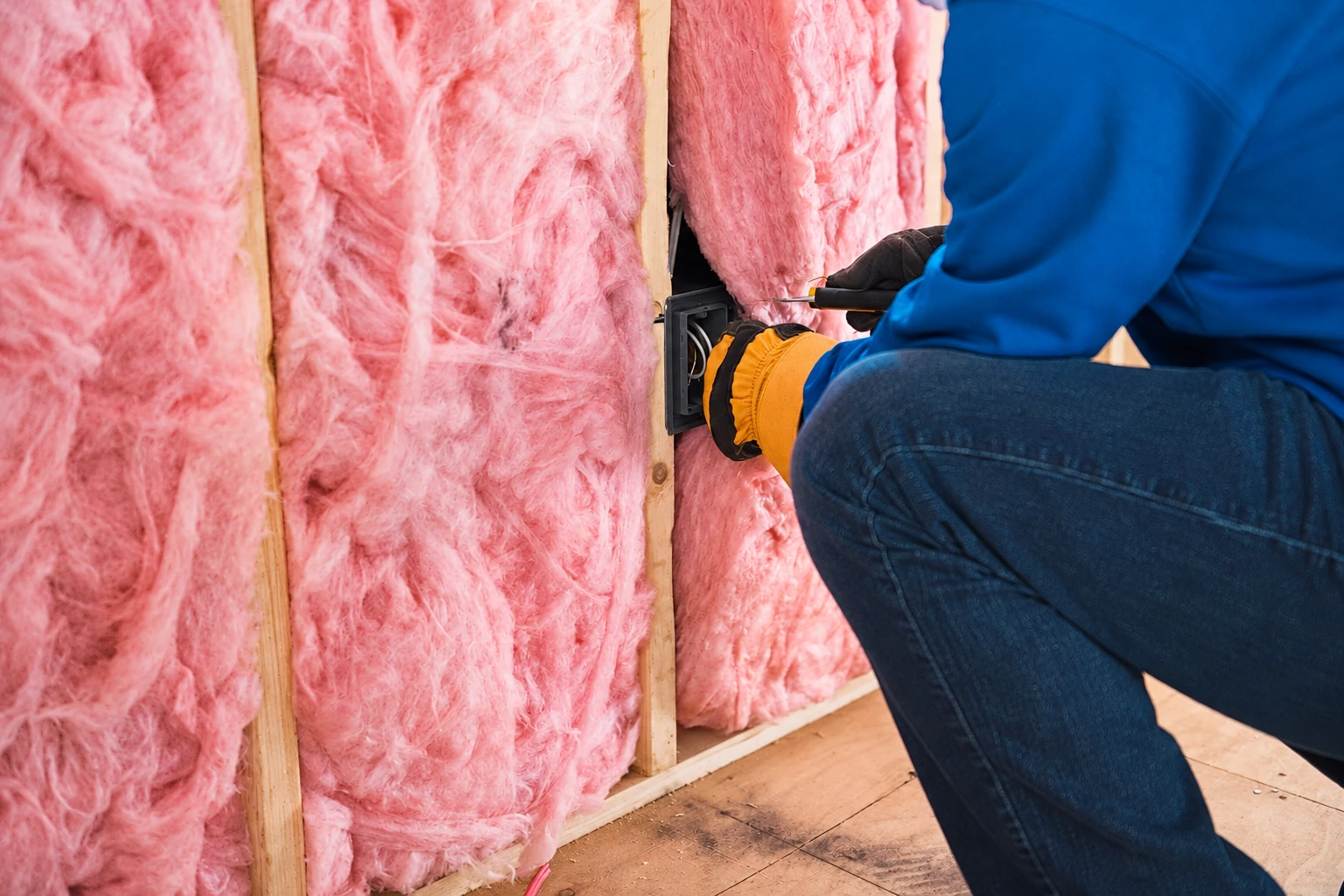
How do you insulate walls that are already finished?
Wall insulation in Hobbs, NM for an existing home usually means packing cellulose or fiberglass tightly into each closed wall cavity through small holes, so the wall fills completely and slows the air moving through it. At B&M Hobbs Spray Foam Insulation, we do this work in Hobbs, North Hobbs, Lovington, Seminole, TX and the cities around them.
Most people call us when some rooms never feel right no matter what the thermostat says, and they've started to wonder what's inside the walls. The price depends on how many square feet of wall we fill, whether we work from inside or outside, what your siding is made of and how much patching or trim goes back on. The schedule depends on those same things and on whether your address needs a permit. Gaps around outlets and windows can leak as much air as an empty cavity, so I may suggest air sealing services along with the walls. If cold floors are your main complaint, basement insulation may be the better first step. You'll see your own figure in the written estimate after I've looked the house over. We're licensed and insured, which matters because New Mexico requires a license for anyone offering construction contracting, and the state's insulation class covers installing insulating material in buildings.
How can you tell your walls need insulation?
Wall problems usually show up as comfort problems first. These are the things homeowners around Hobbs most often tell me about before we ever drill a hole.
Outside walls feel cold to your hand in winter, which usually means the cavity behind them is empty or thin.
Rooms on the sunny side stay hot well into the evening, often because those walls hold little or no insulation.
You feel a draft at outlets and switch plates on outside walls, a sign that air is moving through the cavity.
Your house is older, and you've never seen insulation when an outlet cover or a cabinet comes off.
The air conditioner runs and runs, and the power bill keeps climbing even after the attic was done.
Upstairs rooms or the room over the garage run noticeably hotter than the rest of the house all summer.
If more than one of these sounds like your house, it's worth calling before the weather turns, because wall work goes better when it's planned than when it's rushed.
What happens after you call about your walls?
Here's how a wall job runs with us, one step at a time, so you know who you'll talk to, what you get on paper and what happens in your home.
Call us or send a request
Call (575) 318-2651 or use the form, and we'll set a time for me to come out to the house. If you have them handy, please tell us your siding type, the rough wall area in square feet and about when the home was built.
I look over your walls
I check the outside walls, the siding and what's in the cavities now, and I note anything that should be fixed first, such as a leak or wet material. Your written estimate spells out which walls we fill, whether we work from inside or outside, how the holes get closed and what it all costs.
We handle permits, then install
We take care of the permit question before anything starts, as explained in the questions below. Then our installers fill the walls in the order we agreed, and I check their work along the way.
Walk through the finished walls
When the walls are full, I walk through the house with you, inside and out, so you can see the patches, trim or siding for yourself. Please ask me anything about what we did while I'm there.
Get a written estimate for insulating your walls
Send the form and we'll reply within one business day to set a time for me to come out. The on-site estimate is free and in writing, and there's no obligation to go ahead.
- Call
- (575) 318-2651
- Hours
- Mon–Sun: 6 AM–11 PM
Wall insulation materials and which side we work from
Cellulose and fiberglass are the two loose fills we blow into closed walls, and how tightly they go in often matters as much as which one you pick. When the fill is packed tight, it can't slump to the bottom of the cavity over the years. The wall keeps insulating evenly from floor to ceiling instead of leaving a cold band up top, which is why I check the packing as our installers work.
From outside, our crew takes off siding where it's needed, drills the cavities and puts the siding back once they're full. Vinyl, aluminum and steel siding usually loosen with a siding tool, so your rooms stay untouched. When the siding comes off cleanly, I lean toward this route, because nothing changes inside your house and the holes end up hidden.
Working from inside makes sense when the siding is hard to remove or you'd rather not disturb it. The holes then get patched or covered with chair rail molding, a strip of trim run along the wall, so plan for patched spots or a new trim line in those rooms. Either way, we settle the route and the finish with you before anyone drills.
Wall insulation questions from Hobbs homeowners
How do I get insulation into walls that are already closed up?
We drill small holes into each wall cavity and blow insulation in tightly through a hose until the cavity is full. The holes go in from inside or outside, depending on your walls and siding, and I'll go over how they get closed up before any drilling starts.
How much does blown-in wall insulation cost in Hobbs, NM?
Across the US, installing blown-in wall insulation usually costs about $4 to $4.50 per square foot of wall. That's the going rate nationally, not our quote. Your price depends on how much wall we fill, whether siding comes off or holes get patched inside, and anything that has to be fixed first, and the written estimate lays it all out. Our promise is simple. Your satisfaction, guaranteed.
Can I get money back from New Mexico for insulating my walls?
You may, if the products you install qualify. The state pays property owners back part of the product and installation cost for eligible products installed through December 31, 2027. Low-income and affordable housing taxpayers can earn 100%, up to $2,000 per product, and other owners can earn 50%, up to $1,000. Please check the state's insulation incentive page to see which products qualify before we order materials.
Is cellulose a good choice for insulating my walls?
Cellulose is a good fit for walls that stay dry, because it can hold small amounts of water but breaks down once it gets soaked. It's a fire-retardant insulation made from recycled newspaper and boxes, and it's usually made locally, so it doesn't travel far to reach your house. If I find signs of a leak in a wall, we fix that first.
Do I need a permit to insulate the walls of my Hobbs house?
The city says no building may be altered, repaired or improved without a permit first, except where the code makes an exception, so I check with Hobbs Building Inspections about your address before we start. If your job needs a permit, we apply for it and arrange the inspections. For work on an existing home with no structural changes, the city accepts lighter paperwork, two sets of lists outlining the work and materials, which usually keeps that part simple.
How do I handle possible asbestos before insulating my walls?
If you suspect the work will disturb materials that contain asbestos, the city's guide says to call the Air Pollution Control Bureau first. Please mention it when I come out, and we won't drill until that question is settled.
Other insulation work that pairs with your walls
Air sealing services
Filling the walls helps most when the gaps around outlets, windows and the attic hatch are closed too, so drafts stop sneaking around the new insulation.
Basement insulation
If the floors stay cold after the walls are done, the chill is likely rising from below, and insulating the basement walls deals with it at the source.
Schedule a look at your walls
We answer the phone seven days a week from 6 AM to 11 PM, so please call (575) 318-2651 or use the form whenever it suits you.
Mon–Sun: 6 AM–11 PM