Commercial insulation in Hobbs NM - shops and metal buildings that stay dry inside
If your shop drips under the roof in winter or bakes all summer, we insulate it in the right order so it stays comfortable.
How should you insulate a shop or metal building in Hobbs?
Commercial insulation in Hobbs is insulation for the walls and roof of a shop, warehouse, office or metal building. It keeps the inside at a steadier temperature, quiets the space and, on metal buildings, controls the condensation that drips from cold steel.
At B&M Hobbs Spray Foam Insulation, most commercial calls come from business owners and landlords whose shop sweats under the roof, bakes in summer or costs too much to heat. Before anything else, I ask about the building type, the interior finish and any re-roof you have planned, because those three things shape the job. The price turns mostly on whether the inside is open framing or finished walls, then on the size of the space and the material you choose, such as faced fiberglass or spray foam. The schedule usually follows your roofing plans and any permit the job needs, and the written estimate I leave with you lays out the scope, the order of the work and the price for your building.
How can you tell a commercial building needs insulation?
Most owners call us because of something they see or feel in the building every day. These are the signs I hear about most from Hobbs shops, warehouses and offices, and what each one usually means.
Water drips from the roof panels on cool mornings, which usually means warm, damp air is reaching cold metal.
Rust streaks on the steel framing or stained ceiling tiles often point to condensation that keeps coming back.
The shop floor bakes by early afternoon in summer, because bare metal passes the sun's heat straight through.
The power bill keeps climbing while the heaters run nonstop, so heat is likely leaving through the roof.
Old insulation sags between the framing or hangs torn, which leaves bare metal and lets moisture through.
Rain and equipment noise echo loudly through the building, because bare metal walls and roof do nothing to soften sound.
If water is already dripping onto stock or equipment, please call (575) 318-2651 rather than wait, since that moisture keeps working on the steel every cool night.
What happens when you call us about a commercial building in Hobbs?
Here is how a commercial job runs with us, one step at a time, so you know who will be in your building and what happens before the work starts.
Call or send a request
You call (575) 318-2651 or send the form, and we get back to you to set a time for me to come out. Please tell us what the building is used for and roughly how big it is, so I come prepared.
I look the building over
I walk the building, check the framing, the roof and any old insulation, and note anything that should be fixed first, such as a leak. You get a written estimate that spells out the scope, the materials, the order of the work and the price, so you know the cost before anything starts.
We sort out the permit
If your job needs a permit, we get it in place before anyone climbs a ladder. The city reviews commercial permits in 1 to 10 working days, depending on the information submitted, so we set your start date around that window.
We install, then walk through
Our installers do the work in the order we agreed, and I check it along the way. When it's finished, I walk through the job with you and answer any questions before we leave.
Get a written estimate for your commercial building
We reply within one business day to set a time for me to come out, and the on-site estimate is free with no obligation. Thank you for your time.
- Call
- (575) 318-2651
- Hours
- Mon–Sun: 6 AM–11 PM
Materials and methods for commercial insulation
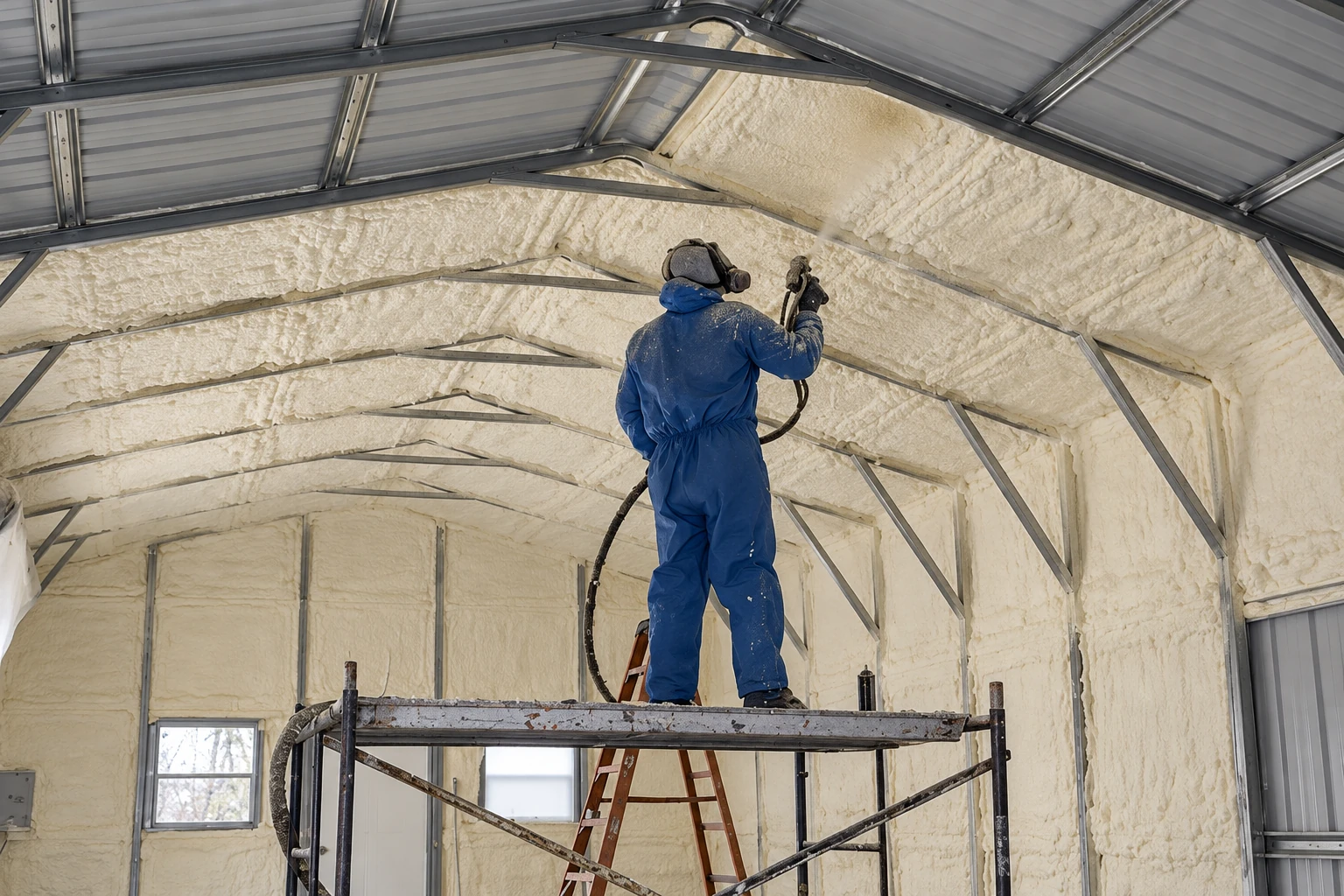
Most metal shops we see get faced fiberglass on the walls and roof, or foam sprayed straight onto the metal. Closed-cell foam, a dense foam that also blocks moisture, costs more but seals air while it insulates, so it suits buildings full of gaps or with ductwork running overhead. On a fairly tight building, sealing the gaps and using faced fiberglass usually wins on cost, and I'll tell you which I'd choose.
Order matters as much as material. If old insulation is wet, torn or full of droppings, it comes out first, because new material over a problem keeps the problem. We seal gaps around pipes, conduit and openings before insulating, so the new layer isn't fighting a draft. On metal, the vapor barrier is typically a reinforced foil facing, and our vapor barrier installation page explains how we put it in.
Plenty of buildings around Hobbs have an office up front and open shop space behind, and the two parts usually need different treatment. If the office sits over a crawl space, a crawl space vapor barrier can go in during the same project. The state's insulation license class leaves out urethane foam roof systems, so foam roofing isn't part of our insulation estimates.
Commercial insulation questions we hear in Hobbs
What work needs a building permit in Hobbs?
The City of Hobbs lists new buildings, additions, remodels and re-roofs as work that typically needs a permit, and insulation by itself isn't named on the city's building services list. If your insulation is part of one of those projects, plan on a permit. Either way, I check with Hobbs Building Inspections before we start, and if a permit is needed, we apply for it and arrange the inspections. For commercial permits the city also asks for energy calculations, and it allows software for those.
Who is allowed to install insulation in New Mexico?
In New Mexico, anyone doing or offering construction contracting work needs a state license, and that includes installing insulation in or on buildings. We're licensed and insured. In Hobbs, the licensed contractor who requests a permit has to sign the application, so it's fair to ask any contractor who will sign yours.
Why does a metal building need a vapor retarder?
A metal building needs a vapor retarder because insulation only controls condensation on the inside surfaces when it's properly installed with one. Fiberglass batts give no air seal on their own, so without that facing, damp indoor air reaches the cold metal skin and drips back down. That's why condensation control is part of our scope on every metal building from the start.
What is the best way to add insulation to a commercial roof?
The best way is usually to add it during a re-roof, because fiberglass can go in as an extra layer during a metal re-roof and on the built-up and single-ply roofs typically used on commercial buildings. Doing it then saves opening the roof a second time later. Please mention any planned re-roof when you call, and I'll plan our work around it.
How much does it cost to insulate a commercial building in Hobbs?
The cost comes down to the building's size, how much of the interior has to be opened or worked around, and which material goes in, so I can only give you a real figure after I've seen the space. Open framing is the easiest to insulate, finished panels and utilities in the way add labor, and spray foam costs more than fiberglass. Your written estimate shows the scope and the price, so you can decide with the numbers in front of you.
How do I get my shop ready for insulation?
Move stock, vehicles and equipment away from the walls and out from under the areas we'll work, and please tell us about any roof leaks before we start. Wet framing has to be fixed and dried first, because insulation over a leak holds the moisture in. If your business stays open while we work, I'll go over which areas we need on which days so you can plan around us.
Moisture control work that pairs with commercial insulation
Crawl space vapor barrier
If your office or showroom sits over a crawl space, ground sheeting there keeps soil moisture from rising into the floor while we insulate the rest.
Vapor barrier installation
When a building's walls or roof trap damp air against cold surfaces, a properly sealed vapor barrier is the layer that keeps condensation off the framing.
Call about insulating your metal building
We answer the phone from 6 AM to 11 PM every day, so call (575) 318-2651 or use the form with your building type, roof type and interior finish in hand.
Mon–Sun: 6 AM–11 PM