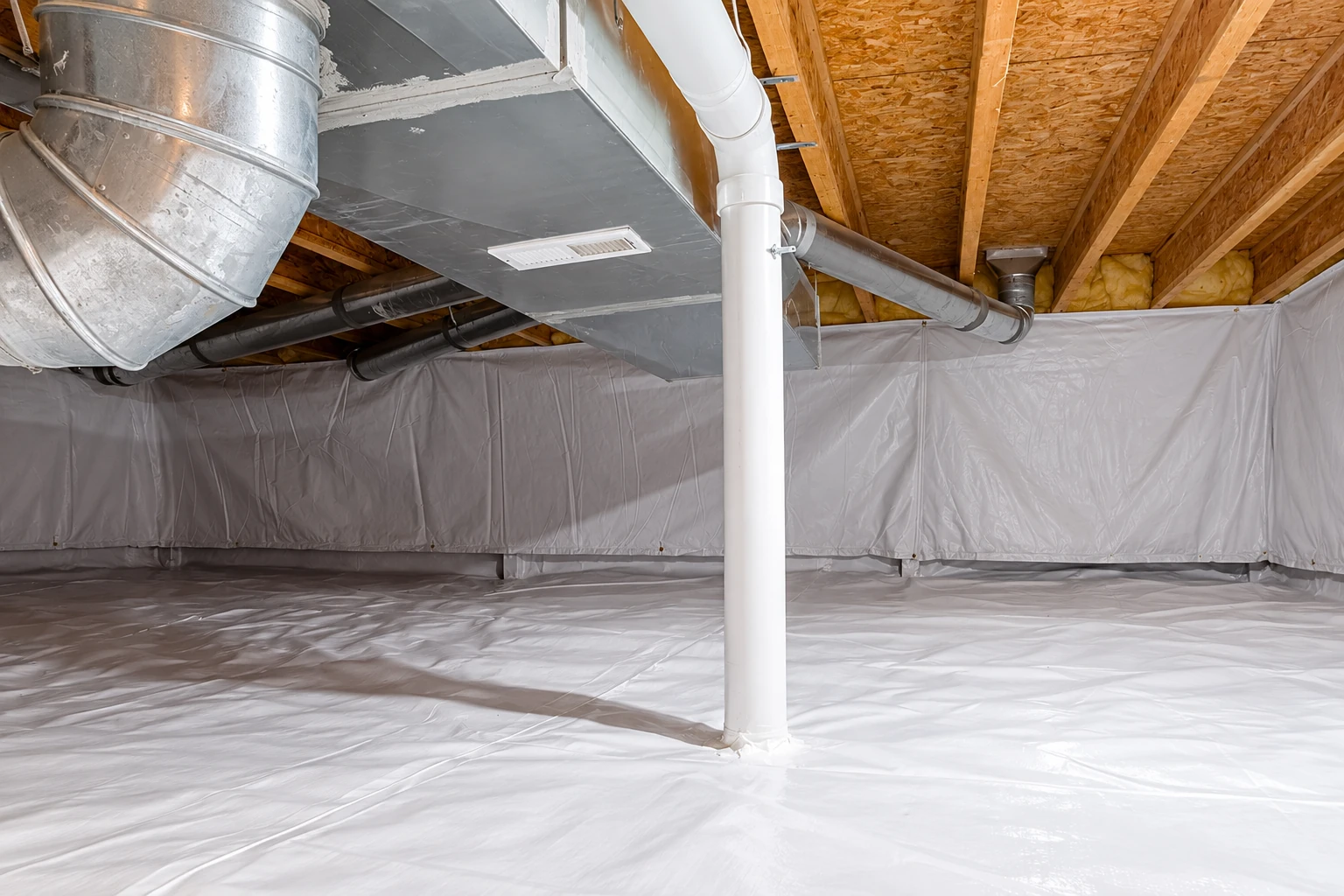
Vapor barrier installation in Hobbs, NM - bare crawl space dirt covered wall to wall
Musty smell, damp dirt or torn plastic under the house? We cover the crawl space floor and run the sheet up walls and piers.
Does my crawl space need a vapor barrier in Hobbs?
Vapor barrier installation in Hobbs means laying a plastic ground cover of polyethylene sheeting over the dirt floor of your crawl space. It keeps ground moisture and soil gases down there instead of letting them get pulled into your house through cracks in and around the subfloor, the layer under your finished floor.
If you've opened the hatch and found bare dirt or old plastic in pieces, the job is usually a full new cover rather than a patch. The price mostly follows the size of the crawl space, how rough the ground is, how many walls and piers the sheet has to climb, the thickness you pick and whether water around the house needs fixing first. The schedule turns on how much has to be cleared out and whether that water work comes first. Air leaving through the attic tends to draw air up from below, so some homeowners pair the cover with attic air sealing to keep the house from pulling on the crawl space.
How can you tell your crawl space needs a vapor barrier?
Most people don't go under the house often, so the first signs usually show up in the rooms above or the moment you lift the hatch. Here's what we hear about most.
A musty smell in rooms over the crawl space usually means damp air is coming up through the floor.
Bare dirt when you open the crawl space hatch means nothing is holding ground moisture down.
Old plastic that's torn, bunched up or pulled back from the edges leaves soil open to the air.
Plastic that stops at the base of the walls leaves the edges uncovered, where moisture still gets through.
Puddles or mud in the crawl space after rain or watering usually point to grading or drainage outside.
Sweating pipes or ducts, or rust on metal under the floor, usually means the air down there stays damp.
If there's standing water down there, please call (575) 318-2651 before laying any plastic yourself, so the source of the water gets sorted out first.
What happens after you call about a crawl space cover in Hobbs?
I come out to look at every job myself, and our installers do the work with me checking along the way. Here's how a vapor barrier job runs, one step at a time.
Call or send a request
You call (575) 318-2651 or send a request through our form. We set a time that suits you for me to come out and see the crawl space.
I look over the crawl space
I check whether the crawl space is vented and look for standing water, torn plastic and stored items, and I note anything that should be fixed first, such as drainage outside. You get a written estimate that lays out the work and the order we'll do it in.
We lay the cover in order
We handle the permit question before we start, and once you've cleared out stored items, our installers lay the plastic and run it up the walls and piers with the seams overlapped. If anything changes on the schedule, I'll call ahead rather than leave you waiting.
We walk the finished job together
When the cover is down, I walk through the finished crawl space with you so you can see the edges, the piers and the seams. I'm glad to answer any questions before we leave.
Get a written estimate for your crawl space cover
We reply within one business day to set a time for me to come out. The on-site estimate is free and in writing, and you're under no obligation to go ahead.
- Call
- (575) 318-2651
- Hours
- Mon–Sun: 6 AM–11 PM
Crawl space cover materials and how we lay them
The cover is polyethylene sheeting. Federal weatherization guidance calls for it over all of the ground, or as close as you can reasonably get, running up the walls, columns and footings. We ask you to clear out stored items first so the sheet can reach every corner, then our installers run it up the walls and piers with the seams overlapped. We also lay it so the drainage paths already down there keep working.
Whether your crawl space has outside vents changes how we finish the seams, so I check that first. The same federal guidance seals the seams and openings with a durable, matching sealant only in unvented crawl spaces, the closed kind with no outside vents. In a vented crawl space the bigger worry is usually water coming in from outside, which the questions below cover.
Around Hobbs, North Hobbs, Lovington, Seminole, TX and the other cities nearby, we see plenty of homes with old plastic in pieces and floor insulation that has sagged or gone damp. In an older house like that, the cover goes down before any retrofit insulation under the floor, so new material isn't hung over a wet space. We're licensed and insured, and you can check any contractor on the view-only license lookup.
Vapor barrier questions from Hobbs homeowners
Do I need a permit to install a vapor barrier in Hobbs, NM?
It can, because as a general rule the city requires a permit from the building official before a regulated building is altered, repaired or improved, and Hobbs Building Inspections issues residential permits. The city's residential guide dates from 2017, so before work starts I check with the office that covers your address. If the job calls for a permit, we apply for it and arrange the inspections.
What is the best thickness for a crawl space vapor barrier?
Federal guidance sets 6-mil sheeting, about six thousandths of an inch thick, as the minimum. One crawl space cost guide says 20-mil plastic is much tougher and nearly impossible to tear, and says the upgrade is worth it over rough ground or exposed gravel, or when someone goes down there often for heating, cooling or plumbing work. I'm happy to talk through which fits your crawl space when I come out.
What causes a wet crawl space in Hobbs, and will a vapor barrier fix it?
A cover alone won't fix it if water is getting in from outside. In vented crawl spaces, the main source of moisture is water coming in because of poor grading, missing drainage around the house or how the yard gets watered. That means the slope and drainage around your house may need work alongside the plastic, and I note that on the estimate so it gets done in the right order.
Should I test my home for radon before getting a vapor barrier?
Yes. The EPA advises testing every home for radon, says the test is easy and inexpensive, and advises fixing levels of 4 picocuries per liter or higher. A ground cover isn't a radon test, so it's worth knowing your number either way.
How much does vapor barrier installation cost in Hobbs?
I give you a written number after I've seen the space, because the size and condition of the crawl space decide most of it. Thicker plastic, a lot of clearing, sealed seams in an unvented space or drainage work outside all add to it. A clear, smooth crawl space with good slope outside keeps it down.
How long does it take to install a vapor barrier in a crawl space?
It mostly depends on the size of the crawl space and how much has to come out before the plastic goes down, plus any water work that has to happen first. You usually don't need to leave the house, since this is plastic sheeting laid under the floor with no spray involved, and we set the day with you once the estimate is agreed.
Insulation work that often goes with a vapor barrier
Attic air sealing
Air escaping through gaps around the attic hatch, pipes and can lights pulls air up from below, so sealing them helps the crawl space cover do its job.
Retrofit insulation
Older houses with thin or fallen insulation under the floors can get it brought up to date once the crawl space below is dry and covered.
Book a look at your crawl space
Call (575) 318-2651 or use our request form, and if you can, tell us whether the crawl space has vents, whether you've seen standing water and how often someone goes down there, so I come out ready for your job.
Mon–Sun: 6 AM–11 PM